

Study · Territorial Risk
How could a major earthquake affect the energy grid in Valais?
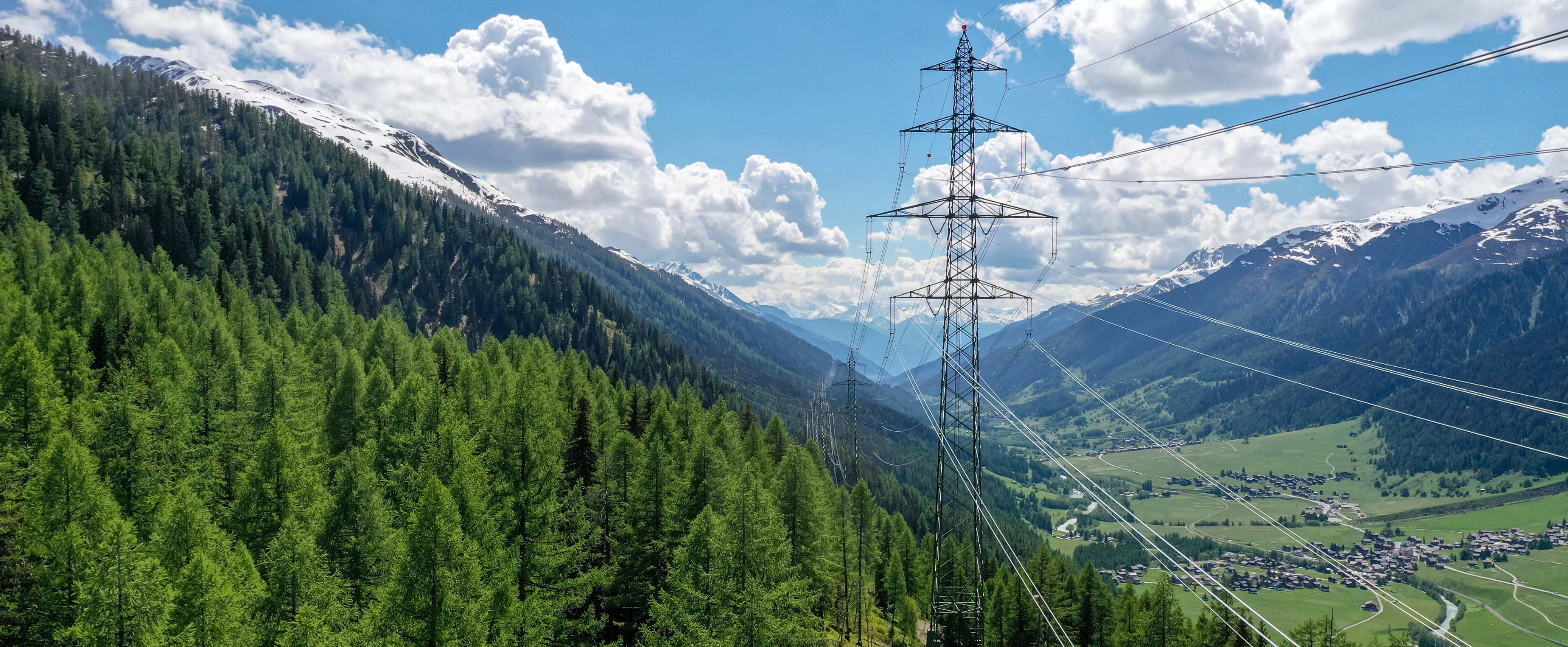
The Canton of Valais is well known for its ski resorts and access to some of the most famous nature spots in the Alps. In Switzerland, though, it is also known to be the highest seismic region in the whole country, with an average of 270 tremors of which only two or three are noticed by residents. The critical stat is that a magnitude 6 movement happens every 100 years, with the last one back in 1946 in Sierre/Sion. (Read more here)
What does this mean for the region?
This exposure has usually meant that after a certain period of time, the canton will experience an earthquake that can produce major damage and disrupt the continuity of the systems in place nowadays. With the soil conditions and the densely populated valley, the Swiss Seismological Service estimates that the next one could result in about 7,000 buildings damaged and an estimated cost of approximately CHF 2.5 billion.
What should be added is that these figures do not include future economic loss in the region if critical infrastructure is affected and has to be recovered. If a manufacturing facility has to stop production, if the hospital or other healthcare-related buildings are affected, or if electricity generation and transmission are disrupted, the losses can be way higher.
How big would the impact be for critical infrastructure?
If we focus entirely on the energy sector, Valais produces its energy mainly from hydropower (35% of the whole Swiss capacity in this category) and accounts for roughly 20% of the total energy production of Switzerland, making the canton a net exporter of it.
Therefore, Valais energy infrastructure is crucial for the canton, but also for neighbouring cantons and the whole country. If it is impacted by an earthquake this will mean possible disruption going from local power cuts to nationwide shortages that would need to be covered by external electricity inputs or discharging battery reserves.
What can get affected?
An earthquake of magnitude 6 has two characteristics to consider as damaging forces for the buildings and infrastructure in the area. On one side the shaking itself: the vibrations and frequency of the tremor can induce building structural damage, destruction of simple structures, cracks and other physical impacts. On the other side, there are cascading failures that can happen, triggered by the movement, such as landslides, earth sinking and even spontaneous slope failures.
Meaning that even if the facility is earthquake-resistant to a magnitude of 6 or more, other events related to the shaking can make them fail. In some cases even the flash flooding caused by a temporary debris dam in the nearby river has been considered. The study identified 18 facilities possibly affected by these cascading events, including hydropower and biogas production facilities together with multiple substations.
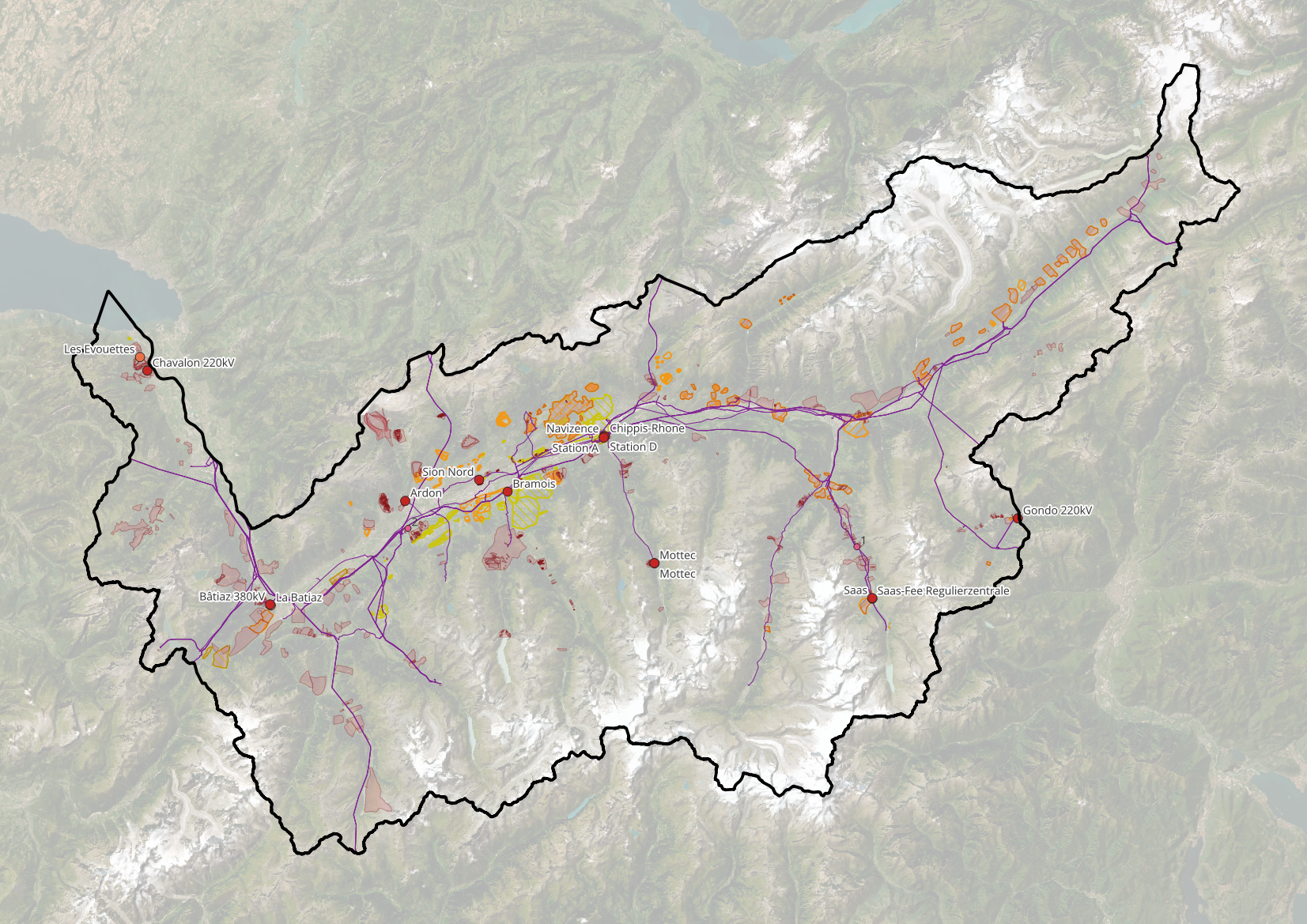
One of the most critical points is in Chippis. The specific spot is highly exposed to landslides from the north face of the mountainside below Château de Beauregard, which, if it happens, will mean disruption and even destruction of production facilities together with substations and transmission line towers.
From the official geological information, 4 out of 7 facilities could be totally or partially buried, and around 8 towers affected, impacting 5 out of the 6 connections (south side) of Creux de Chippis.
What has been done?
Some studies have already been placed and run in this area, including hazard monitoring in place since October 2025: extensometers, a laser scanner and a webcam. A drone flies over the site every week. Large trees on the slope have also been cut down.
All this information is also being considered and acted on when planning future developments and improvements of the grid in this area, such as the Chamoson–Chippis line and the Bickigen–Chippis grid update.
What should be done further?
Knowing the real exposure every institution and business has to this kind of event, not only earthquakes and derivatives but also flooding, heavy wind, cyclones, permafrost landslides, etc. Every private and public institution in such a highly exposed area should be aware of what is threatening operations and continuity, so that action can be taken to mitigate, avoid and prepare for such events, achieving the minimal impact.
If you feel your organisation can benefit from this knowledge, we can help you! Contact us and we will arrange a short call to evaluate with you the relevance, scope and timeline that best fits your particular situation.