

Insight · Natural Hazards
How the 2024 Valencia flood stopped a working region
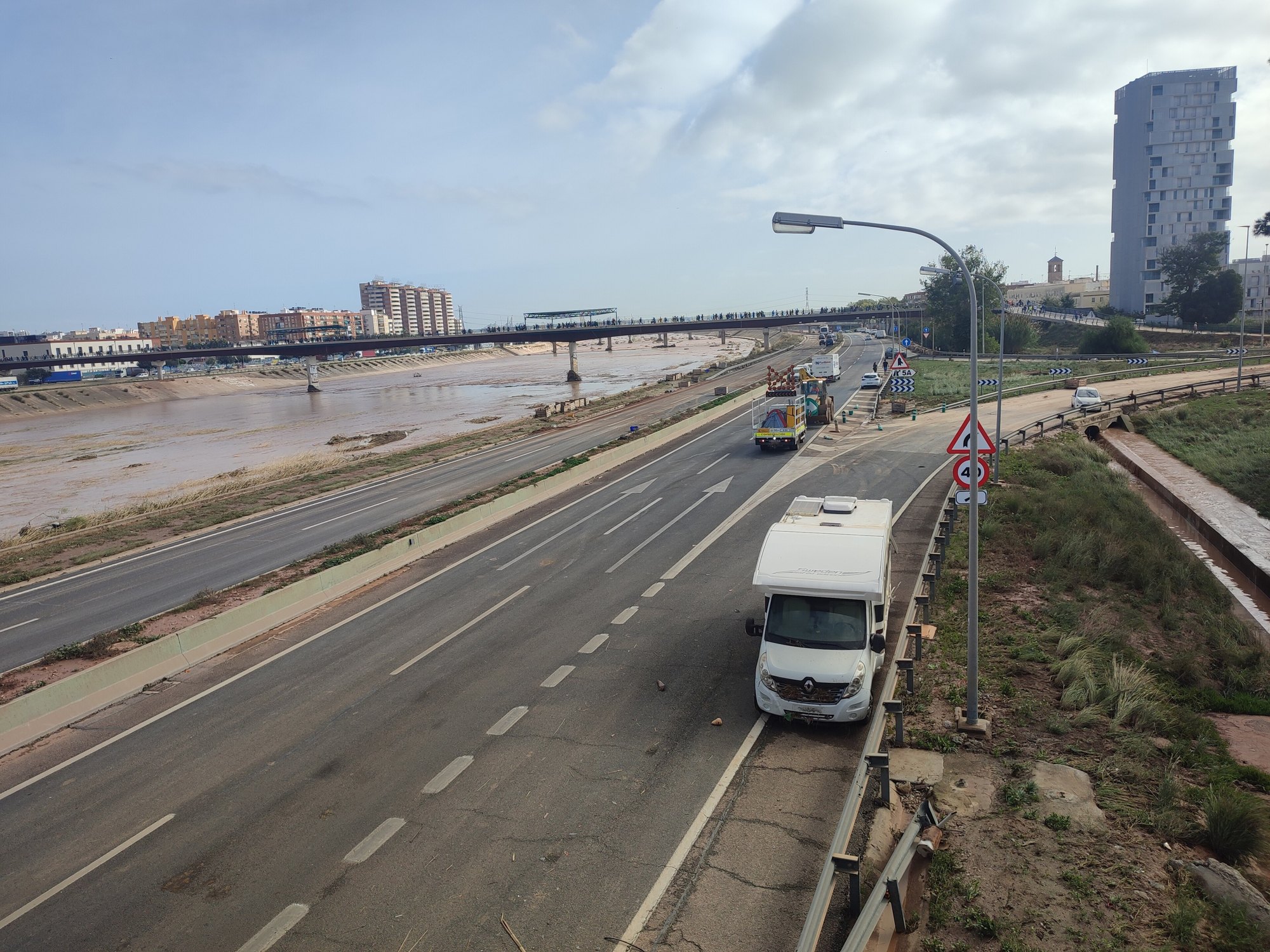
On 29 October 2024 a cut-off low sent a flash flood across the south of the Valencia metropolitan area. It was not a slow river rising. Water came down the ravines into l’Horta Sud — the belt of towns, industrial parks and roads that feed the city, the port and the plants just outside the water. The site that looked dry still stopped. Access, workforce and cargo sat in the same flood.
What the water closed
The A-7 and A-3, the metropolitan ring, the approaches to the Port of Valencia. About 5,000 trucks a day use those roads to reach one of Europe’s busiest container ports. Terminals could reopen within a day or two. The landside could not. A plant that was not itself flooded still declared force majeure because the roads around it, and the people who work there, were.
Eight in ten firms in the inundated parks had to stop. Citrus waiting to leave by sea had no corridor. This was a territorial stop: housing, shops, parks and the motorway failed together because they occupy the same flood path.
The bill
Spain’s fiscal watchdog, AIReF, put the public cost at €12.2 billion — more than 8% of the region’s GDP, and the second-largest fiscal shock since 2005 after the pandemic. Other damage estimates ran from about €12 to €18 billion. The Consorcio, Spain’s catastrophe insurer, has paid around €4.4 billion on more than 200,000 claims: homes, vehicles, shops, industrial risks. The state reports more than €9.6 billion deployed in reconstruction and support. That is the cash.
The social bill sat in the same places. More than 2,300 shops were affected; a year later seven in ten had reopened, two in ten still shut. About 6% of firms in the zero zone closed for good — mostly for lack of cash to restart. Furlough schemes held jobs. Streets, ground floors and lifts did not come back as fast as payroll.
What came back, and what did not
Two years on, the pulse of the industrial parks is largely back. Energy use and hiring recovered through 2025. The Consorcio had processed about 99% of material and interruption claims. On the government’s reading, Valencia is again growing above the Spanish average. That is the success of the cash layer.
The reconstruction layer is slower. Municipal works were allocated and many validated; not all are built. The regional government had executed about two-thirds of an extraordinary credit line by the end of 2025, leaving hundreds of millions uncommitted. Hundreds of lifts in apartment buildings were still out of service well into 2026. Park roads, drainage and signage lagged the firms that had already reopened. Repairs at existing dams and canals were done. The flood-control works that would change the next event remain, in the engineers’ phrase, largely pending.
Whether the strategy worked
It worked as a payment strategy. The catastrophe insurer absorbed a historic bill without private cover collapsing; furlough held the workforce; shops and parks came back faster than the first weeks suggested. The Valencia Chamber of Commerce’s one-year survey is the closest long-term business reading: most of the productive tissue survived.
It has not yet worked as a territorial strategy. A 2026 industry assessment is blunt: a €12 billion disaster has not transformed Spain’s flood resilience. Engineers at the first anniversary said the same — warnings and emergency repairs improved; the map of occupancy on the ravines did not. Money reached families and firms faster than works reached the ground. Paying like-for-like is not the same as deciding what to restore first, what to redesign, and which corridor unlocks the rest.
What a faster return would have sequenced
An exposure reading would have treated l’Horta Sud as a flood path occupied by parks, housing and the roads to the port — not as a set of plots that looked dry. In the first weeks, a disruption reading would have treated the closed motorway, the port, the parks and the workforce as one event. The larger miss is reconstruction: which access restores the parks; which parks restore jobs; which housing restores the workforce; which hydraulic works change the next flood rather than rebuild the last one. Valencia paid fast. It is still waiting on the order of works that would have put the affected area back in business as a territory.
Two years on, the region is working again in the places that could reopen. The assessment that matters is whether the next flash flood meets a redesigned corridor — or the same occupancy, better indemnified.
Terranova Strategy
Strategic Territorial Recovery
Strategic Territorial Recovery sequences reconstruction by what unlocks the territory — access, parks, housing, then the works that change the next flood — so a paid claim is not mistaken for a region back in business. Territorial Exposure Assessment would have shown that occupancy on the ravine before the water. Crisis Management and Business Continuity would have treated the closed motorway, the port and the parks as one event.
Explore service